What Is a Merchant of Record?
Everyone explains Merchant of Record in complicated terms, no one really explains simply who it benefits and why. But I did it for you.
Selling services globally introduces complexity beyond payments alone. Taxes, compliance, and legal responsibilities quickly add up. A Merchant of Record simplifies these challenges.
In this article, I explain what MoR is and how partnering with one can transform your business and your comfort level. As simply and clearly as possible.
Are you ready? Here we go!
What “Merchant of Record” actually means
A Merchant of Record (MoR) is a legal entity that manages customer payments, allows you to generate invoices, and assumes global tax obligations and financial risks for you.
When a client pays for your
- physical product,
- digital product,
- freelance service, or
- subscription,
will show the MoR’s name (not yours!) on the invoice and client card statement.
In this setup, you just create and deliver the product/service.
Then, MoR takes care of the rest:
- Tax and collection
- Invoicing and documentation
- Payment and compliance
- Refunds, disputes & chargeback
This way, you can focus on your best work, free from tasks that waste time and money.
Learn the difference between invoicing tools and MoRs.
Who needs a MoR (and why)
Almost everyone working online can benefit from a Merchant of Record. But some need it more than others (really):
- Freelancers
- Independent contractors
- Digital content creators
- Small business owners
- SaaS entrepreneurs
If you work solo or are part of a small team (2-4 people), you know how limited resources (time and money) can be. Customer relationships and tax rules, which change every few months, can slowly seep your creative energy.
When you move to MoR, you’ll be able to delegate payments, tax compliance, and refunds back, allowing you to focus on what you’re best at. You’ll also have protection from risks that erode your income, like refunds, chargebacks, and legal liabilities.
One simple switch = fewer admin tasks, less stress, and more time to grow your business.
When freelancers feel the pain (and why MoR exists)
As a freelancer, without a Merchant of Record (MoR), you’ll encounter a series of challenging obstacles, and that’s precisely why MoR exists! 👇🏻
1) “My EU client needs a VAT‑compliant invoice.”
→ Normally, you’d need to research VAT rates in multiple countries and calculate the rates yourself (and VAT rates can change constantly). It can be difficult to keep track of.
2) “My US client says I need a W‑9.”
→ Normally, it is your responsibility to determine which tax form (W-9, W-8BEN, 1099, etc.) is applicable, prepare the document to the IRS’s satisfaction, and submit it.
3) “A chargeback froze my PayPal balance for weeks.”
→ Normally, you manage the dispute process yourself, send the evidence, and wait for weeks. In the end, you either get your money back or all your efforts go down the drain.
4) “My payment failed because of SCA/3DS2.”
→ Typically, you’d have to resolve these authentication issues on your own, contact your payment provider, and ensure that all security requirements are satisfied.
📌 This is exactly why the MoR model exists for freelancers. For a small fee (5% on Ruul), you are able to delegate items that would normally take you time and resources to learn or fix yourself.
How an MoR works (4 basic steps)
See what to expect when working with a MoR 👇🏻
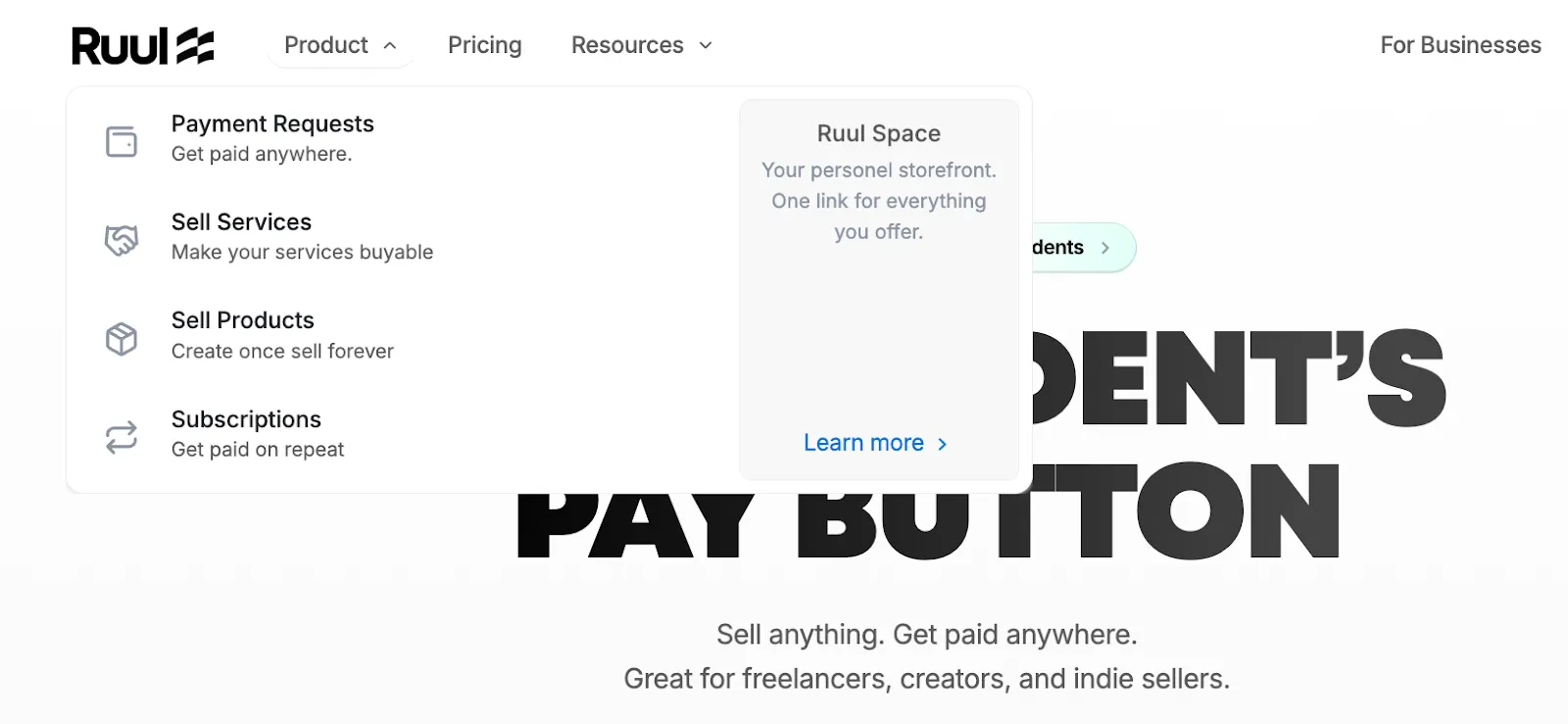
1) Sell or send a payment request
MoR works in two ways:
a. Sell a product, service, or subscription
Your customer can find and buy your product either through external links or directly on the platform. This could be a digital product or a subscription-based software/service.
A unique feature of Ruul is that freelancers can create subscription-based service packages.
Such as
- monthly social media management,
- weekly newsletters, etc.
Thus, you can set up recurring payments automatically.
b. Send a payment request
This method is popular with freelancers who work on a project basis. You can create a $500 invoice, send it to your client, and they can pay without signing up.
You can do it all with Ruul.
2) MoR manages payments
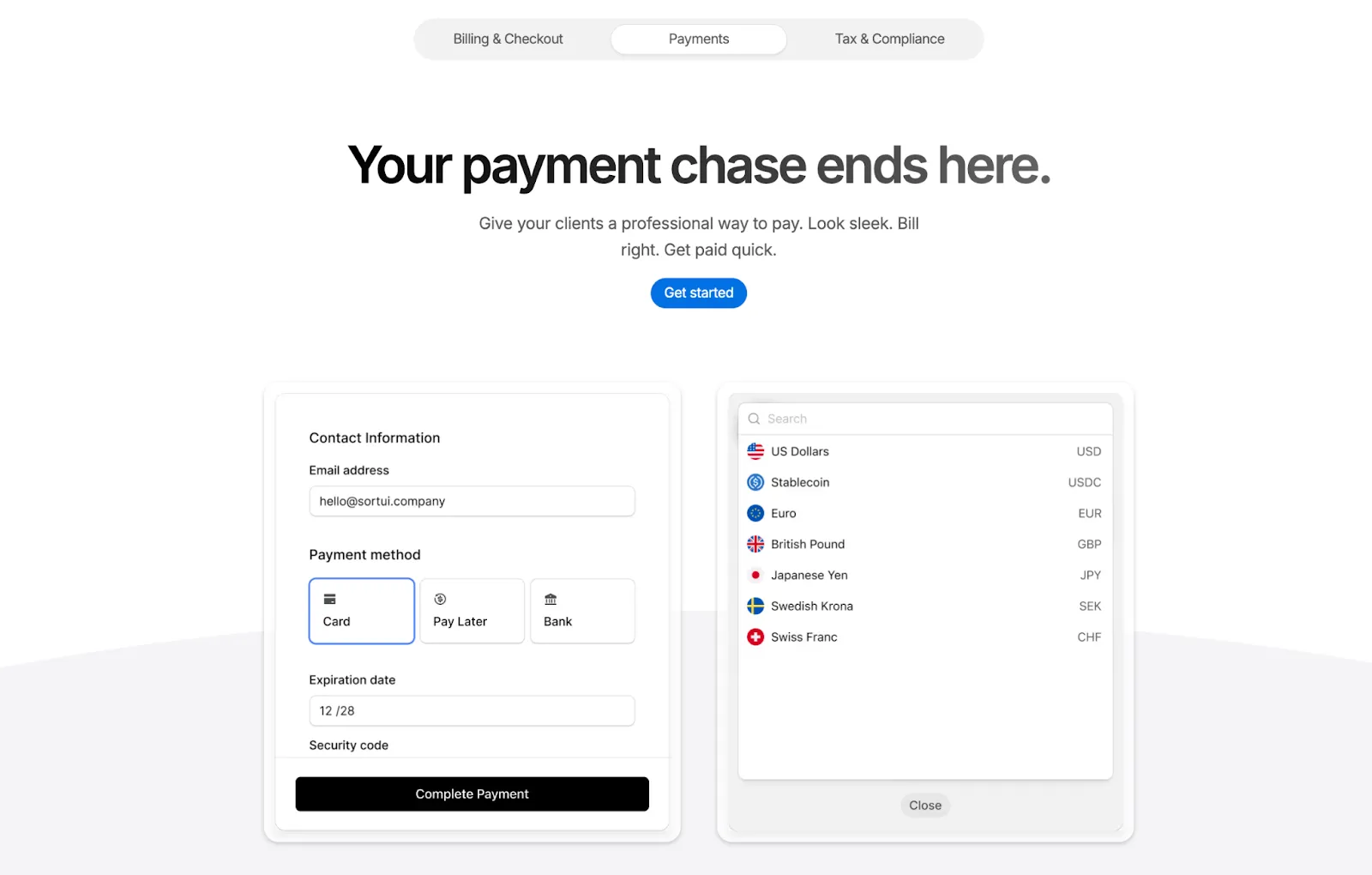
MoR’s most popular feature is its ability to issue globally VAT-compliant invoices. It automatically calculates and collects the VAT/sales tax rate applicable in the customer’s country (no manual tracking required 🙅🏻).
But that’s not all.
MoR then reports the collected tax amounts to the relevant authorities and makes tax payments on your behalf. For instance, if a German customer purchases software, MoR adds 19% VAT to the payment and reports it to the EU.
However, your MoR must operate in the relevant country for automatic VAT calculation. And don’t worry, MoRs support many countries as a matter of principle. Still, I recommend finding out before choosing (Ruul supports 190 countries).
3) Get your payment
Once the payment is confirmed, the money’s yours.
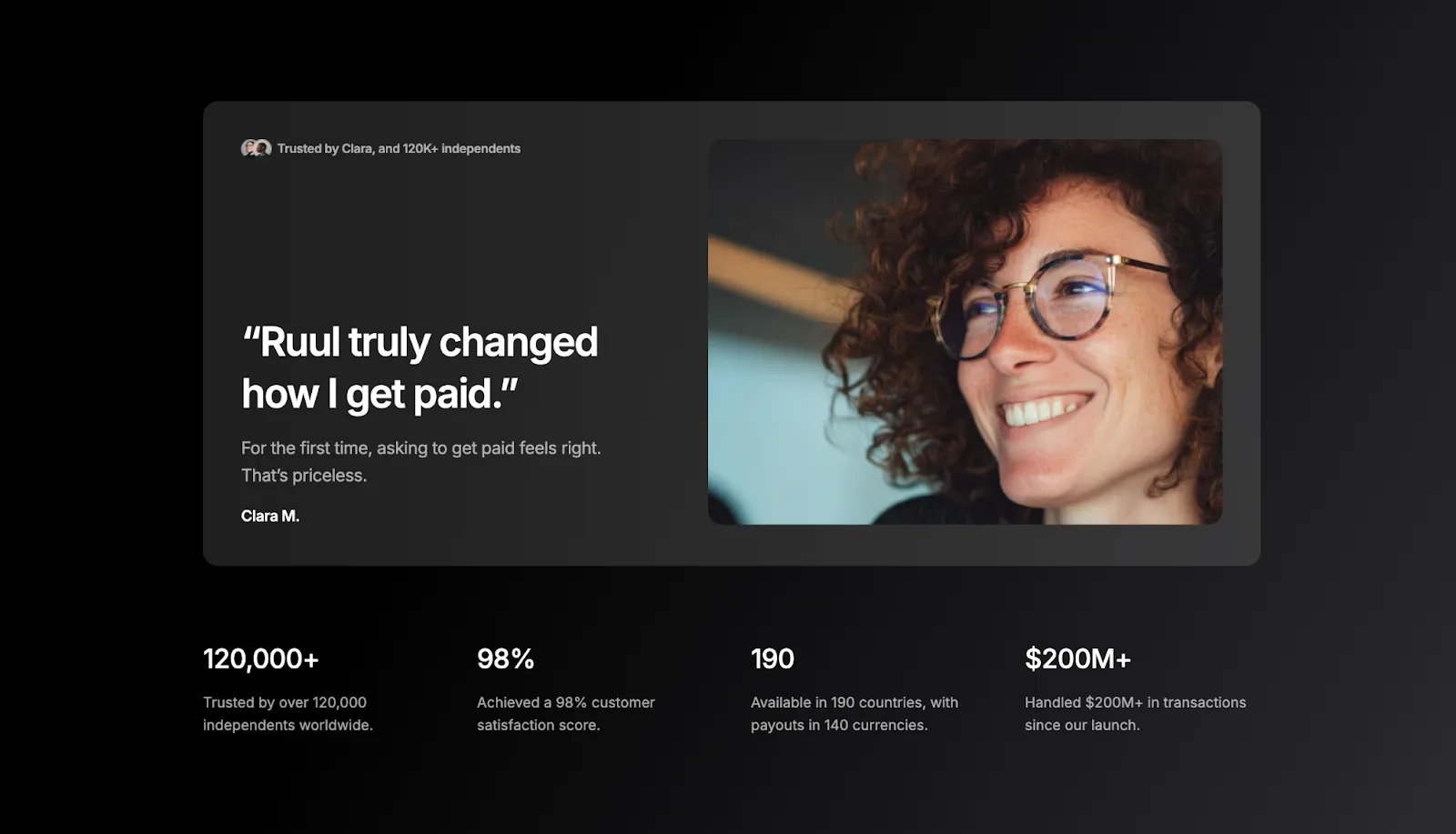
But, the MoR takes a small commission from your earnings (for ex., Gumroad charges 10%, and Ruul 5%).
You can withdraw your approved balance using the methods permitted by the platform. But remember, some platforms have limited methods, and payments may take longer.
For instance, Gumroad does not pay your balance until 7 days after the sale. But, if you need your money fast, you can choose platforms that pay quicker.
With Ruul, transfers via bank transfer take a day, but arrive almost instantly via crypto!
4) Managing refunds, disputes, and chargebacks
Okay, but you shouldn’t overlook the invisible risks after the sale. What if the customer requests a refund, initiates a dispute, or files a chargeback? The MoR model handles all of this directly with payment processors and banks.
Normally, when your customer disputes the payment, your account may be frozen until the issue is resolved. You also need to provide documentation proving the legitimacy of the transaction. This can take weeks and affect your cash flow.
Worse still, the outcome is uncertain. Fortunately, with MoR, this risk is removed.
Is MoR Right for you?
If you’re not sure whether MoR is for you, here’s a quick section to help you decide. You’ll find answers to questions like: “Do I really need an MoR?” and “What would I have to handle myself without one?”
1) 60‑Second diagnostic
I’ve got 6 quick questions for you. Just answer “Yes” or “No” :
- Do you sell to multiple countries?
- Do your clients require VAT/GST invoices?
- Do you hate filing taxes?
- Do you deal with disputes/chargebacks?
- Do you need multiple payout currencies?
- Do you want to focus on your craft, not compliance?
If you said “yes” to 3+ → MoR likely fits.
2) Build vs. Buy: Cost & risk calculator
Does the DIY column look intimidating? Do you have the time, cash, and other resources to set everything up yourself?
On the right, you’ll see what the MoR handles for you. Getting started is quick, costs are low, and you don’t need big resources.
3) Edge Cases: When MoR isn’t just helpful, it’s essential
There are a few situations where I just can’t help but say, “You need an MoR for this.” Beyond everything else, I’ve summed up the 3 cases where having a MoR really becomes a necessity. 👇🏻
a) Subscriptions & recurring services
Recurring payments mean recurring tax obligations. 😬 Each billing period must comply with the customer’s local VAT or sales tax rules.
Think about how much time this wastes:
- New invoices every month
- Worrying about whether VAT has changed
- Manually tracking payments
Instead, Merchant of Record automatically tracks billing cycles, calculates taxes, and maintains a valid invoice for you. Especially if you’re a micro-entrepreneur, I think MoR is a safe place for you.
Otherwise, trying to handle everything yourself will quickly burn you out.
b) B2B reverse charge
Selling to registered businesses abroad triggers reverse charge rules.
- VAT line,
- tax ID, and
- wording change.
MoR platforms adapt the invoice according to the buyer type and jurisdiction. This way, you don’t have to deal with EU directives yourself. Frankly, if you’re invoicing other companies, I’m confident that MoR will maintain your compliance and trust.
c) Mixed Products (Physical + Digital)
Different product types come with different tax treatments.
Digital goods may be taxed where the buyer lives, while physical ones follow the seller’s location. MoR automatically applies the right rate and issues compliant invoices, even if your store mixes both.
If you sell both tangible and digital goods, MoR keeps your checkout flow simple, and legal.
Finding the right MoR platform
Picking a Merchant of Record can eat up days. Features, fees, fine print… and you end up choosing nothing.
So let’s cut the noise. Here are four checkpoints that actually matter. Make your decision based on these 👇🏻
1) Is it built for your business model?
You can’t sell subscriptions on a MoR platform built only for digital products. That’s why it’s important to look closely at what each platform actually supports.
For example, Ruul is designed for
- freelance services,
- digital products, and
- subscriptions.
If you’re selling a one-time service, a digital download, or recurring work, Ruul can handle it easily. But if you run a full e-commerce store with physical inventory, you’ll need a different platform.
Pro tip: Choose a MoR that fits what you actually sell, not what you hope to sell someday.
2) Is there payment flexibility?
An MoR platform should offer flexible payment options for both sides.
Your customer should be able to pay in their own currency. That’s why it’s great to choose an MoR that supports both bank transfers and credit card payments.
Ruul handles this perfectly.
Ruul supports 190 countries and 140+ currencies (including cryptocurrency). For example, no matter how your customer pays, you can receive payment in the way you want. Even if your customer pays in euros, you can receive the payment in cryptocurrency. Perfect.
3) What’s the platform cost?
An MoR platform should be affordable and not take a big chunk of your earnings. Most platforms charge a commission between 5% and 20%, usually per invoice. Personally, anything above 10% sounds pricey, since there are more reasonable options out there.
At Ruul, we’ve been running a flat 5% fee for a while. This low, competitive rate is already a favorite and helps freelancers keep most of their income. Normally, you’d have to pay much more for these kinds of services.
4) Are payments fast?
You’ve finished your work and your invoice is paid. Can you get your money right away? This really matters because bills and personal needs don’t wait.
However, some platforms like Gumroad hold your funds for up to 7 days before sending them to you. They do this for security reasons, but that’s quite a long time. Especially for long-term projects, it means you won’t have access to your money for a while.
If fast payments are a priority for you, make sure to check the platform’s withdrawal rules.
With Ruul, bank transfers reach your account in just one day, and crypto payouts arrive instantly in your Binance account!
Using Ruul as your MoR
Ruul is the best Merchant of Record platform for independent professionals.
It’s ideal for:
- Sending payment requests to your clients,
- Selling packaged digital products, and
- Offering subscription-based products or services.
1) Set up in minutes
Now, let’s see how to make Ruul your MoR partner. 👇🏻
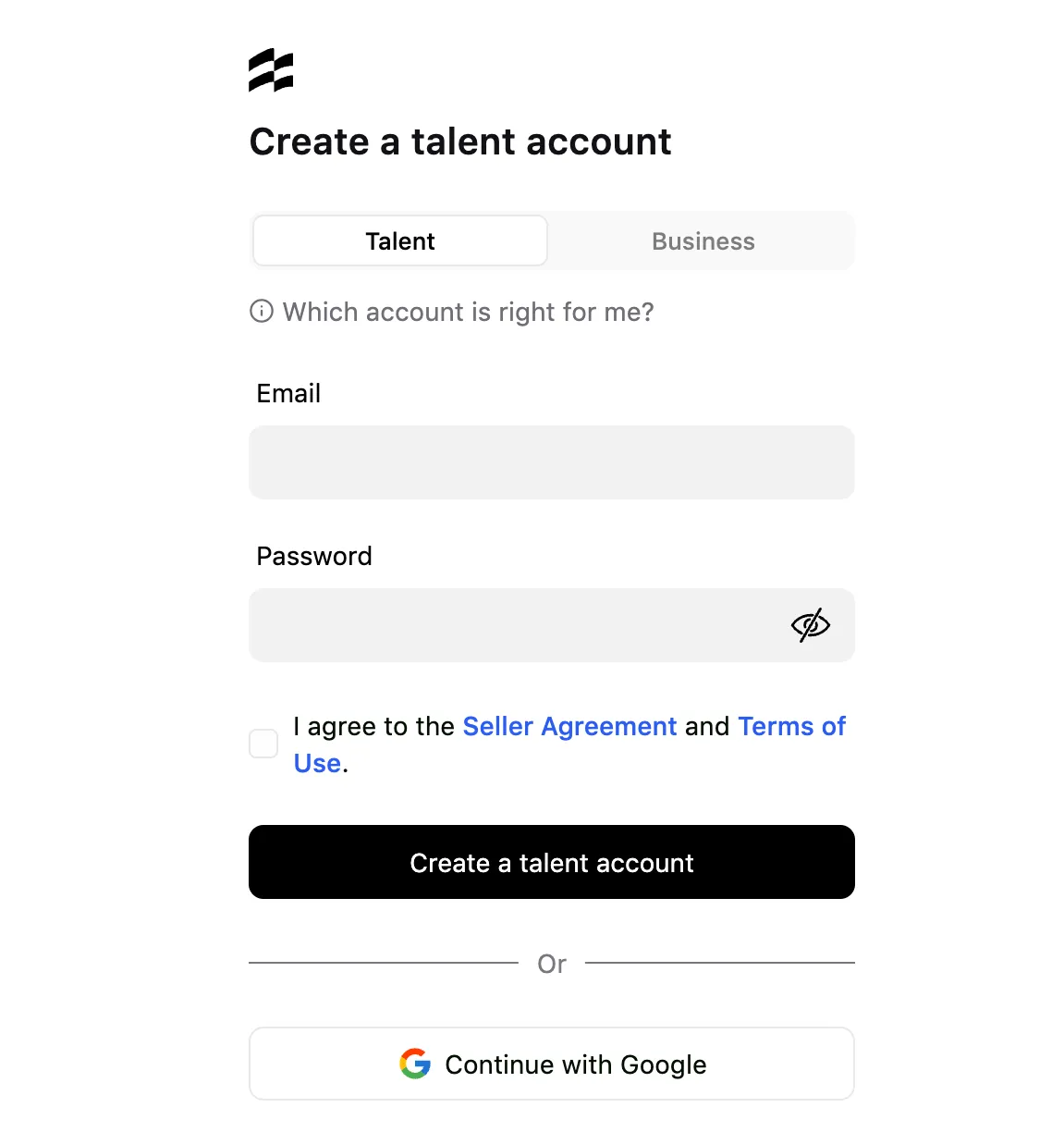
a) Create a talent account
Joining Ruul as a talent (seller) takes just two steps: your email address and password.
If you prefer, you can sign up instantly with your Google account.
b. Authorize Ruul
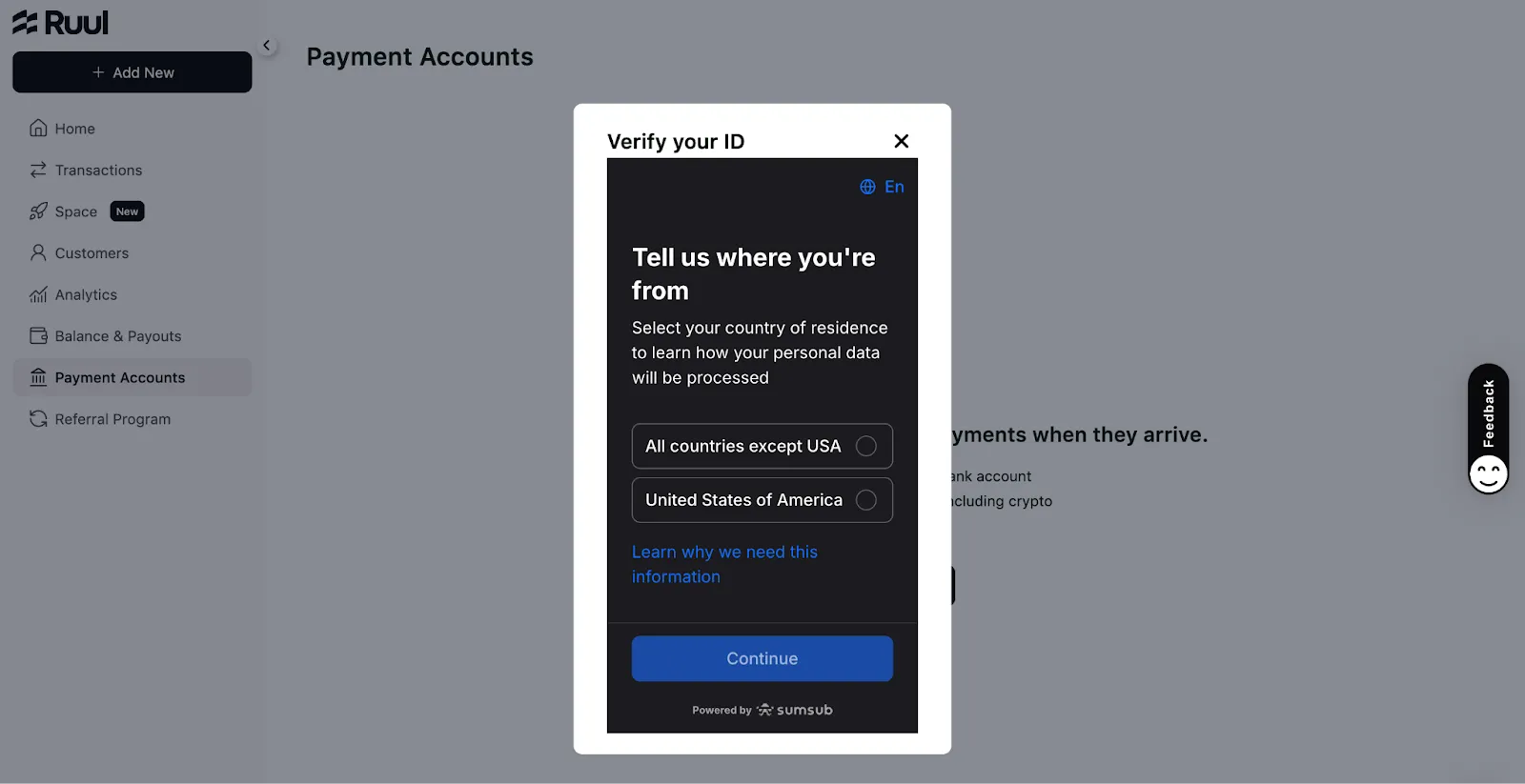
After setting up your account, there’s one required step before you can start selling: identity verification. Once you complete this, Ruul becomes your authorized MoR.
c. Create payment request/product/service
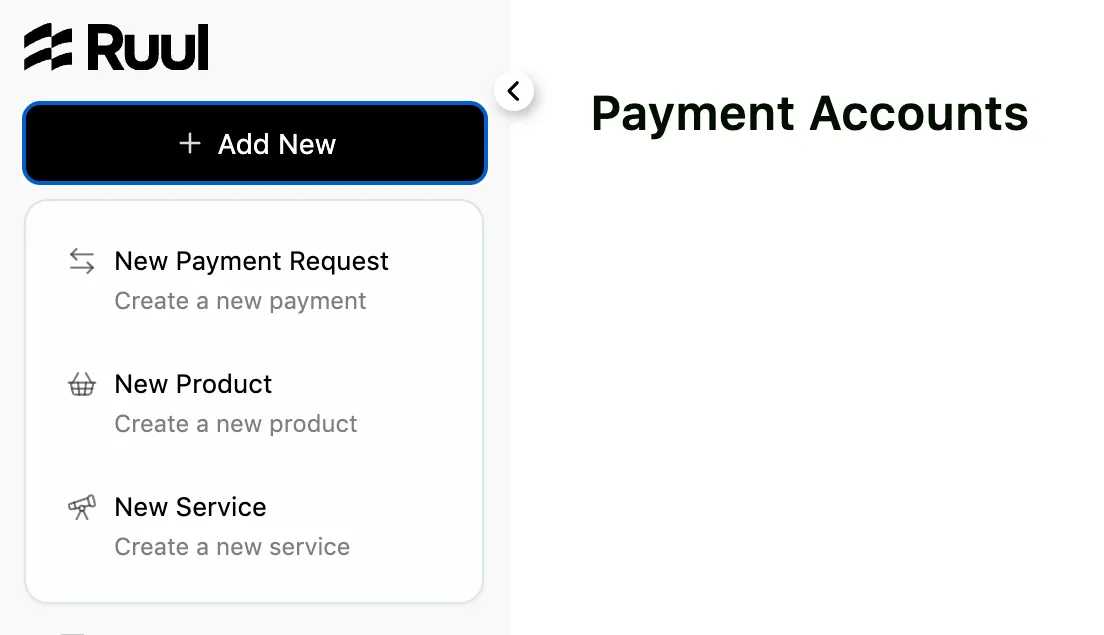
Click “Add New ” at the top left, and you’ll see three options:
- New payment request: Send an invoice your client can pay directly
- New product: Sell your digital assets as a package
- New service: Offer an instantly purchasable service package
d. Share link → receive payout
If you’re selling a digital product or service package, payments are processed automatically.
For a payment request , you’ll need to send the invoice link to your client. They can pay it easily (no Ruul account required).
But, if you’ve sold a service package , your payment will be held safely until you deliver the project and your client confirms it.
2) Everyday ops
Manage refunds, export receipts, and track multi-currency clients from one dashboard.
- Freelancers shouldn’t spend most of their time tracking payments by 2026. If refunds, tax receipts, and client balances are scattered across different places, a “centralized” solution is essential. Ruul brings these daily moving parts together.
- Tracking customers who use multiple currencies is about knowing how much you have left after taxes are deducted. MoR converts, records, and transfers in real time. So instead of guessing with currency calculators, you can see your net profit.
Everyday ops under an MoR feel like autopilot: you still own your work, but the boring, risky, repetitive parts simply stop stealing your time.
3) Light compliance ops
Most people assume “VAT compliance” is a checkbox you tick once and forget.
In reality, it’s dozens of small, moving parts that can turn into a headache fast. Changing tax rates, reverse-charge rules, region-specific invoice formats… the whole maze.
Ruul quietly handles all those behind-the-scenes updates while keeping your dashboard clean and consistent.
Accountants don’t need a folder of raw invoices, they need clarity.
Ruul exports reconciled records by country and tax type, so your accountant doesn’t have to decode platform fees or foreign exchange differences manually.
“Light compliance” doesn’t mean cutting corners, it means letting a system do the heavy lifting. No plugin updates, no late-night tax research, no EU rate spreadsheet tabs.
Just compliance that runs itself.
Joining Ruul independently now takes just a minute.
FAQs
1. What is an example of a Merchant of Record?
A Merchant of Record (MoR) example is Ruul, which processes client payments, issues VAT-compliant invoices, and manages global taxes for freelancers and creators. Other examples include Gumroad and Paddle, which perform similar roles.
2. What is meant by Merchant of Record?
A Merchant of Record (MoR) is the legal seller on an invoice who collects customer payments, handles global tax compliance, manages chargebacks, and pays you afterward. It acts as your financial and legal intermediary.
3. Is PayPal a Merchant of Record?
No. PayPal is a payment processor, not a Merchant of Record. It transfers money between parties but doesn’t handle invoicing, taxes, or compliance on your behalf like MoR platforms such as Ruul do.
4. Do I need a Merchant of Record?
Yes. If you sell internationally, issue invoices, or hate dealing with taxes. A Merchant of Record automates VAT, payments, and refunds so you can focus on your actual work instead of paperwork and compliance.
Related articles
How to Accept Credit Card Payment as a Freelancer
PaymentsApr 5, 2026
What Are the Benefits of Accepting Crypto Payments as a Freelancer?
PaymentsApr 5, 2026
How to Accept Cryptocurrency Payments
PaymentsApr 3, 2026
Ruul Now Supports Cryptocurrency Payments for Freelancers
PaymentsApr 5, 2026
How to Price Your Freelance Writing Services Effectively
PaymentsApr 5, 2026