US Digital Nomad Visa for Freelancers
Learn about US digital nomad visa options for freelancing or working remotely in the USA.
The idea of living in the US as a digital nomad sounds appealing, but the reality is less straightforward. There is no clear visa designed specifically for freelancers. Still, there are workarounds worth understanding. Here’s what options actually exist today.
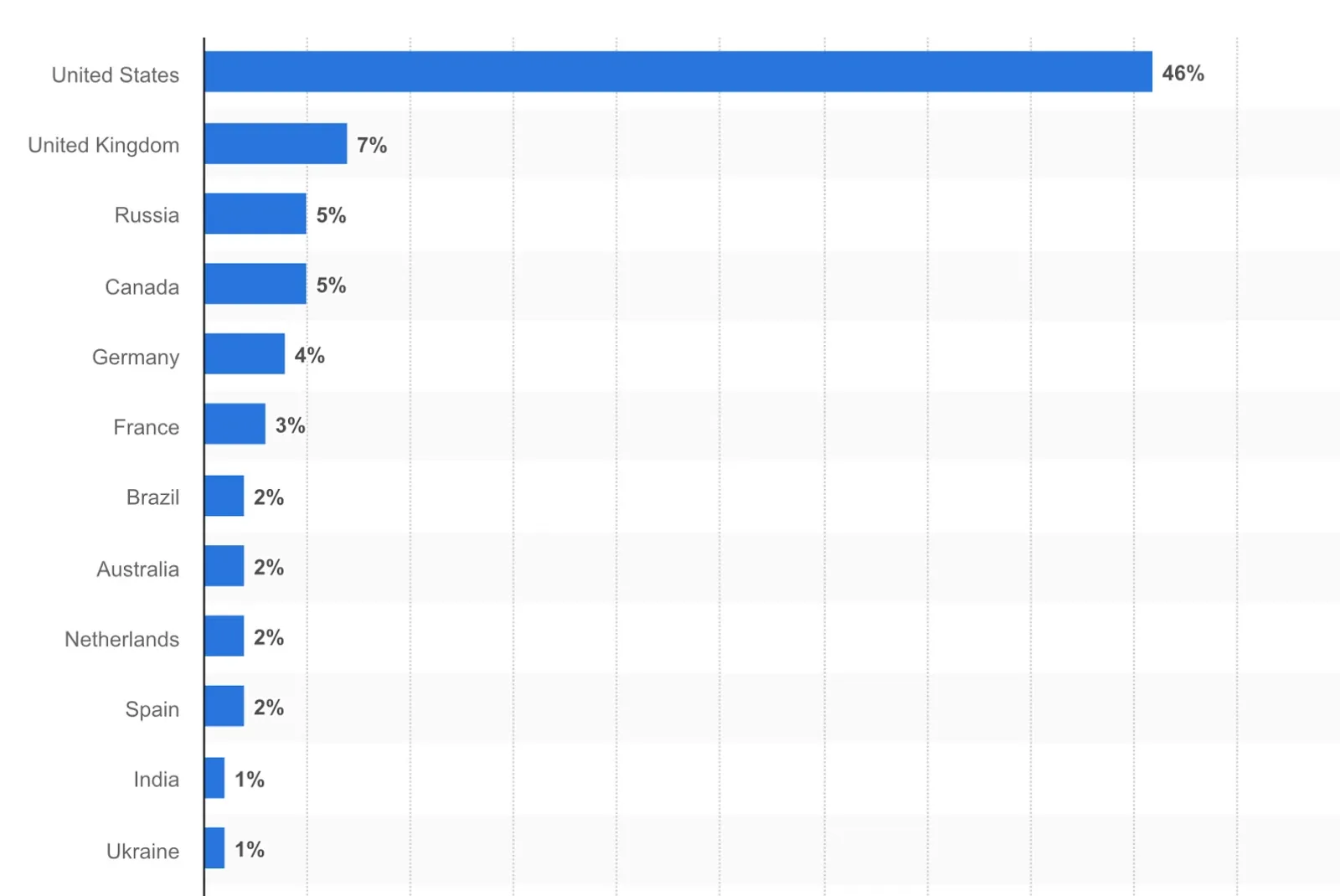
The digital nomad lifestyle attracts many people, with 40 million digital nomads worldwide and 18.1 million in the US.
Many independents want to live the American dream as a nomad. However, even if the door to dreams is open to everyone, the Golden Gate is only open to visa holders.
Statistia - Share of digital nomads worldwide as of March 2024, by nationality:
The US digital nomad visa for freelancers is not legally available - at least for now.
So how do millions of digital nomads live in the US? With alternative visa options.
The US visa options for digital nomads: Which one works for you?
Although you hear it everywhere, there is no “US freelancer visa ” or “US digital nomad visa ”. These are just some nicknames given to business visas.
So, you can check the alternative visa options for digital nomadism in the US, which we will talk about in a moment.
The right visa, but which one?
B-2 Tourist Visa
B-2 visa is a type of visa issued to tourists and is quite easy to get.
In fact, it is NOT a work visa. It allows you to stay up to 6 months and prevents you from doing business and commercial traveling.
It may be the better alternative if you want to stay for a short period of time.
- Tourist visa
- 6 months stay
- Application cost: $185
H-1B Visa
If you have a university diploma and work in a highly specialized field, H-1B may be an alternative.
But here’s the crux of the matter: you need a company to sponsor you. Without this, this visa is out of the question.
- Application cost: $460
- Duration: 3 years (Can be extended up to 6 years)
A major requirement?
- Your employer must file an H-1B petition and submit a Labour Condition Application (LCA) to US Immigration (USCIS).
Notice: When the demand is high, applications are randomly selected. So even if you qualify, good luck also plays a role.
You can also get details about the H-1B electronic registration process on the official USCIS website.
O-1 Visa
Do you have expertise in science, arts, business, or sports? Maybe the O-1 visa could be an ideal match.
But it is all about proving your achievements.
- Application cost: $205
- Duration up to 3 years
What do you need?
- You need a US employer sponsoring you. Agree this in advance with your employer.
- Awards, publications, or notable contributions in your field. Build a bumper portfolio using all of it.
- Your employer must file an I-129 petition with USCIS.
If you have credibility and can back it up with solid evidence, this visa can open doors for you.
B-1 Visa
Need to attend a conference, negotiate a contract, or handle short-term business matters? The B-1 visa might be all you need.
- Application fee: $185
- Duration: Up to 6 months
What can you do with a B-1?
- Join business meetings and trade events
- Conduct scientific research
- Attend training programs
- Finalize inheritance or property matters
This visa doesn’t allow you to work or bring your family along. It’s strictly for temporary business visits.
To apply, fill out the DS-160 form and submit it to the tax office.
Note: The fees you pay for visas are not refunded after the application.
How to obtain a work visa in the US?
Although many people hope to work in the US, the visa process can be complicated and requires careful planning.
- If you are searching for a temporary job, an employer will typically need to sponsor you by filing a Temporary (Nonimmigrant) Worker application on its behalf.
- If you have a stellar educational and professional record, you may qualify for a Permanent Worker visa, which provides long-term employment in the United States.
For a smoother and error-free process and to minimize mistakes, consider consulting an immigration attorney. Their experience can help ensure compliance and increase your chances of approval.
Can you work remotely/freelance in the US with a Tourist Visa?
Lots of freelancers are thinking about this question: Can I work remotely in the US on a Tourist Visa?
NO , you can’t legally work in the US on a visitor visa (B-2).
However, notice that here we mean you cannot engage in work that provides direct services to a U.S. company or earns U.S.-based income. Otherwise, if you are a freelancer from another country, you can just keep doing what you always do.
In this scenario, you will have no legal connection with the US. You’re legally just a traveler in the country.
Still, you need to know more about visa restrictions to stay out of legal trouble.
Is the US an ideal place for Digital Nomadism?
Thinking about making the US your next digital nomad destination? Here’s what you should know before taking the plunge.
With 18.1 million digital nomads, the USA ranks #1 in the world. So you definitely won’t feel alone here. But there’s a catch: it’s not the most budget-friendly place to live.
A solo digital nomad can expect to spend around $2,000–$3,000 per month, excluding rent. Of course, this depends on where you go. San Francisco? Super expensive. But if you pick the right city, it can be more manageable.
Important info for digital nomads:
- Internet speed: 99.3 Mbps on average, so no worries about laggy Zoom calls.
- Power and plugs: The US uses Type A & B plugs, so if you’re coming from Europe or other regions, you’ll probably need an adapter.
- Best location: Popular states include Florida, Texas, Nevada, and North Carolina. If you’re looking for strong nomad communities, Austin and Jacksonville are great picks.
Not sold in the USA? If the USA feels too pricey or complicated, there are a few neighboring countries with digital nomad visas that might work better:
- Mexico
- Canada
- Costa Rica
- Puerto Rico (technically part of the USA, but different visa rules apply)
- Belize
Visa Waiver Program (VWP)
The Visa Waiver Program frees digital nomads from the pain of applying for a visa.
- If you come from countries covered by the Visa Waiver,
- If you have ESTA approval, and
- If you have a passport valid for a min. 6 months, you are waived from the visa.
Countries on the list:
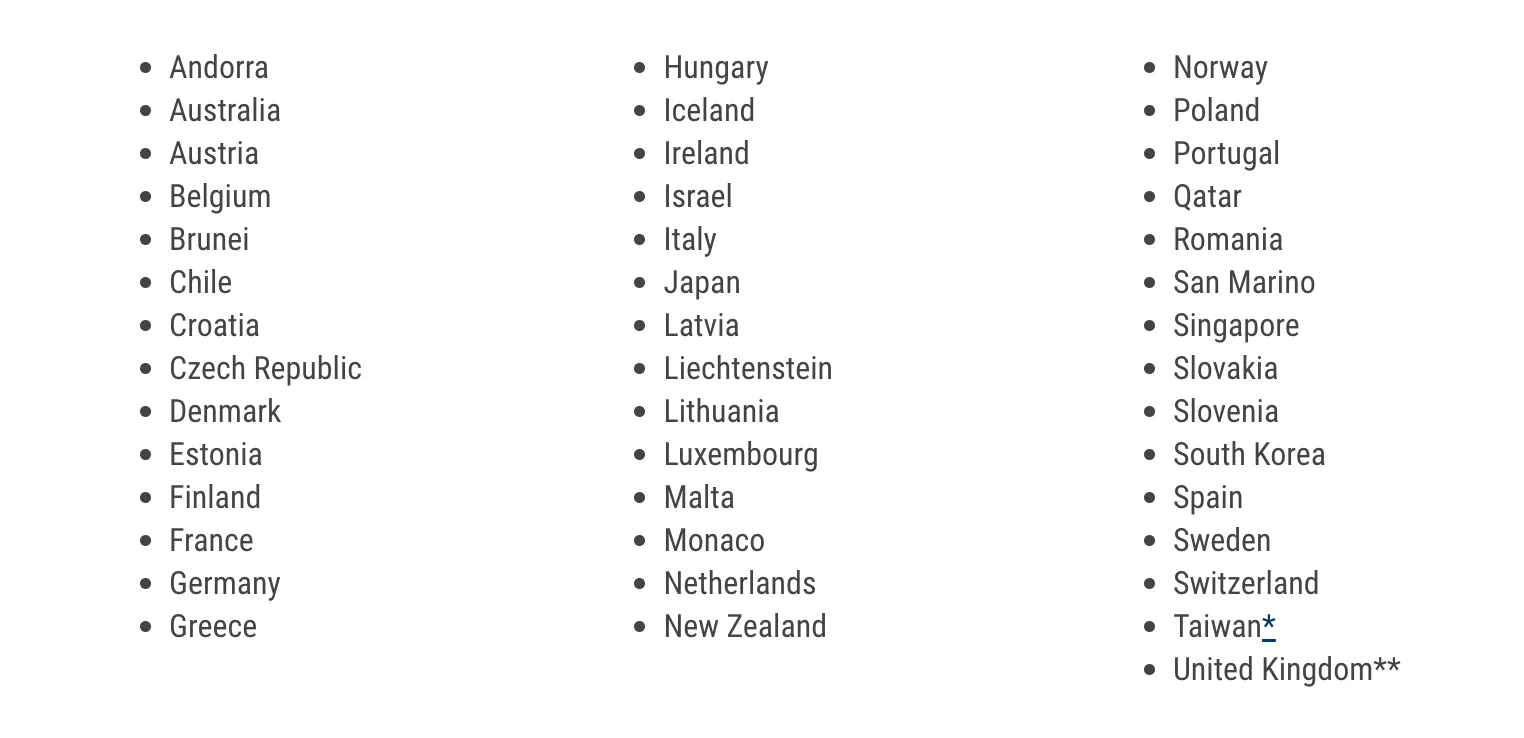
Go to the official website for more info.
Typical digital nomad problems
The biggest common challenges of digital nomads:
- financial anxiety,
- late payments,
- unsteady work, and
- bad client relationships.
Okay, let’s say you’re a freelance designer, working with a client from somewhere else. You finish the project, send the invoice and… crickets. No payment.
You call them and they promise to send it “soon”, but weeks go by and nothing is credited to your bank balance.
This is a nightmare for freelancers. Late payments disrupt your cash flow and make it harder to cover expenses, especially when traveling. Chasing money is frustrating and time-consuming.
How to solve it?
By setting clear payment terms and using tools that automate payment, you can stay focused on your business instead of worrying about when (or if) you’ll get paid.
Less stress, more freedom - that’s the goal, no?
How Ruul help digital nomads?
Digital nomadism and freelancing can get messy when it comes to invoices, payments, and dealing with clients across different countries.
Do it with Ruul:
- Create and mail an invoice
- Keep track of payments and monitor them automatically
- Minimize the risk of late or skipped pay
By using tools built for freelancers, digital nomads can focus more on their work and travel versus stressing over financial uncertainties.
What makes Ruul stand out?
Ruul eliminates the need to handle forms like W-9, 1099, or W-8BEN by managing them for all parties. This allows you to enjoy faster, more secure bank transfers and flexible payment options tailored to your business needs.
We call Ruul “Freelancer’s pay button” because it requires literally just clicking a button to get paid.
- It acts as the legal entity selling your services to business clients in 190 countries—so you stay compliant.
- It supports over 140+ currencies , including cryptocurrency, enabling flexible global payments.
- It offers an extremely competitive commission rate , starting at just 2.75% , which is lower than most alternatives.
- It makes getting paid easy and secure , no matter where your clients are.
Sign up for Ruul for more projects and travel time, and get paid 4 times faster.
FAQ
Can you freelance without a green card?
You can work as a freelancer without a green card. However, you will need the appropriate work visa (e.g., H-1B, O-1).
Does the US have a digital nomad visa?
No, there is no legally valid US Digital Nomad Visa.
Related articles